Laboratory

Technologies Behind Our Diagnostics

Our laboratory combines validated scientific methods and modern analyzer systems to produce reliable, timely, and clinically actionable diagnostic outcomes.

Primary Technology

CHEMILUMINESCENCE IMMUNOASSAY (CLIA)

Chemiluminescence Immunoassay (CLIA)

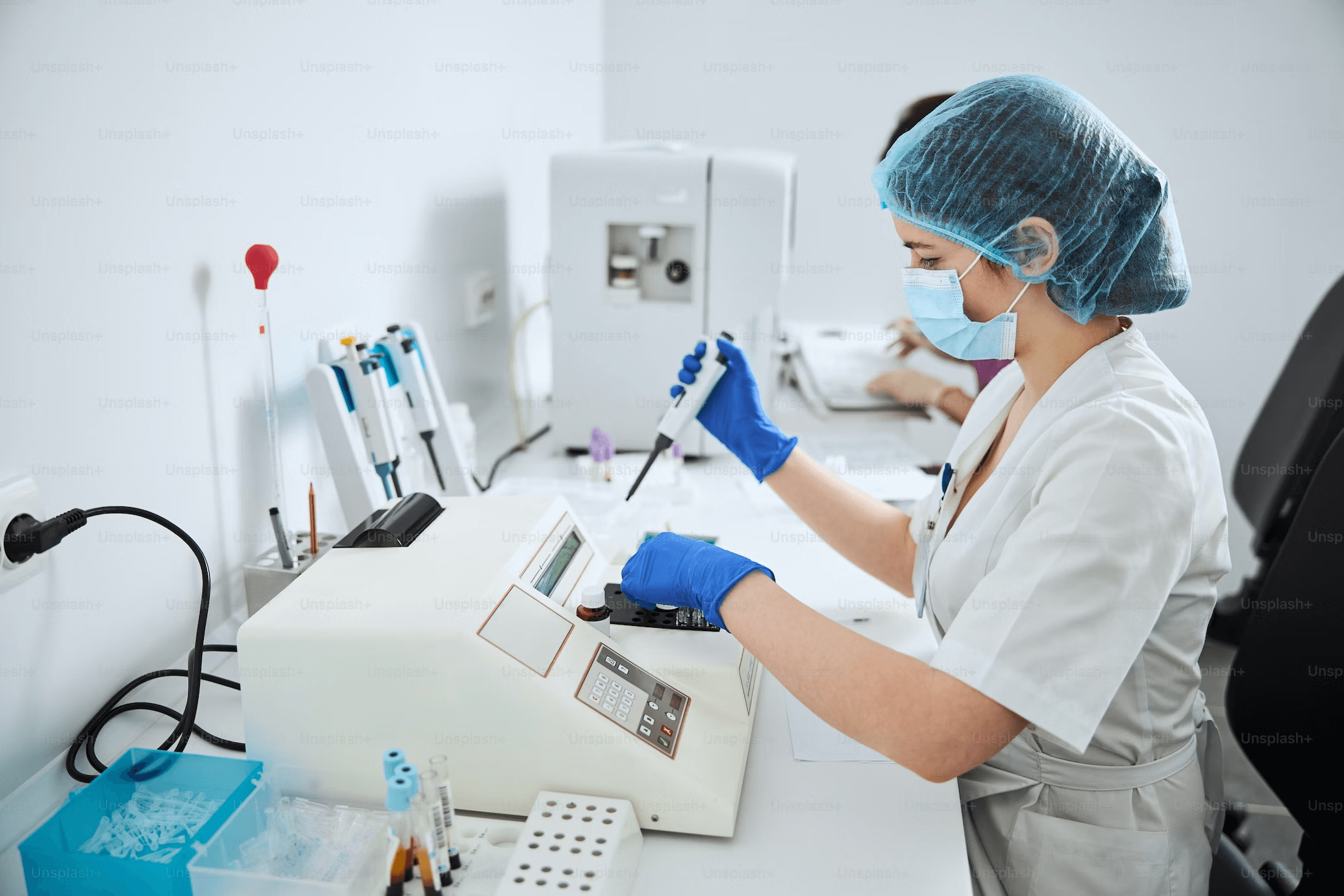
Chemiluminescence Immunoassay (CLIA) provides a sensitive, high throughput, fully automated immunological technique, which has revolutionized Immunodiagnostics.

View full Chemiluminescence Immunoassay (CLIA) details and test list

Chemiluminescence Immunoassay (CLIA) provides a sensitive, high throughput, fully automated immunological technique, which has revolutionized Immunodiagnostics. It measures the intensity of light emitted when the complex of antigen in the patient's sample and the enzyme linked antibody reacts with chemiluminescent molecule (such as luminol) producing a weak signal. The enzyme component then provides signal amplification.

One reason accounting for the growing popularity of chemiluminescence assays is its exquisite detection sensitivity. With its wide potential chemiluminescence has become a powerful and a versatile technology in the in vitro diagnosis. CLIA provides advantages over other methods for having increased sensitivity, less prone to interference and background signals and requires simple instrumentation.

Tests

  • THYROID STIMULATING HORMONE (TSH)
  • TOTAL THYROXINE (T4)
  • TOTAL TRIIODOTHYRONINE (T3)
  • FREE TRIIODOTHYRONINE (FT3)
  • FREE THYROXINE (FT4)
  • 25-OH VITAMIN D (TOTAL)
  • VITAMIN B-12
  • TESTOSTERONE
  • PROLACTIN (PRL)
  • PROSTATE SPECIFIC ANTIGEN (PSA)
  • LEUTINISING HORMONE (LH)
  • FOLLICLE STIMULATING HORMONE (FSH)

Additional Platforms

Other Technologies Used in Our Lab

Enzyme Linked Immunosorbent Assay (ELISA)

ENZYME LINKED IMMUNOSORBENT ASSAY (ELISA)

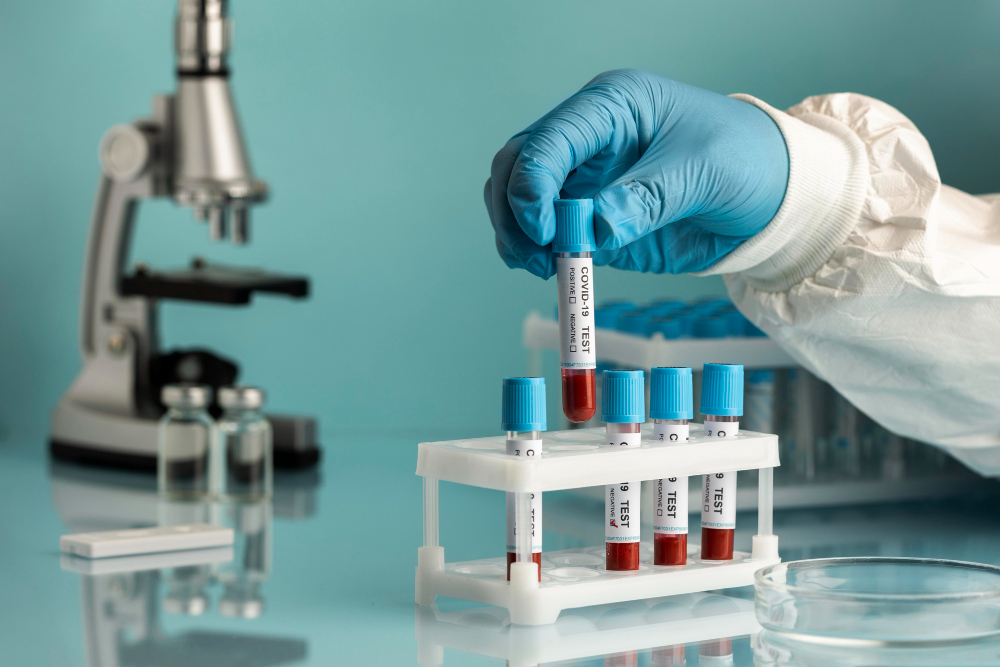
ELISA is an immunological technique used to detect the presence of an antibody or an antigen in a sample.
View full Enzyme Linked Immunosorbent Assay (ELISA) details and test list

ELISA is an immunological technique which is used to detect the presence of an antibody or an antigen in a sample. An unknown amount of antigen is coated on a solid phase, and a specific antibody is washed over the surface so that it can bind to the antigen. The immune complex thus formed is linked to an enzyme, which acts on a substrate to give a coloured reaction which is detected using ultramodern ELISA plate readers.

Tests

  • ANTI NUCLEAR ANTIBODIES (ANA)
  • Anti - dsDNA (DNA)
  • ANTI CYCLIC CITRULLINATED PEPTIDE ANTIBODY (ACCP)
  • ANTI HEPATITIS C VIRUS (HCV) - TOTAL
  • HEPATITIS B SURFACE ANTIGEN (HBsAg)
  • HIV ELISA
  • CARDIOLIPIN ANTIBODY (ACL)
  • TOXO GONDII - IgG/IgM
  • RUBELLA - IgG/IgM
  • CYTOMEGALO VIRUS (CMV) - IgG/IgM
  • HERPES SIMPLEX VIRUS I (HSV) - IgG/IgM
  • HERPES SIMPLEX VIRUS II (HSV) - IgG/IgM
High Performance Liquid Chromatography (HPLC)

HIGH PERFORMANCE LIQUID CHROMATOGRAPHY (HPLC)

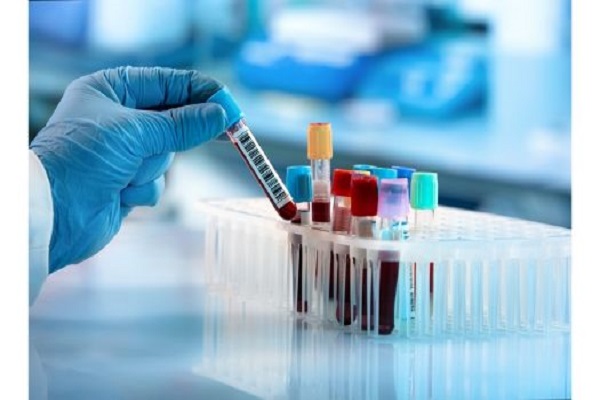
HPLC is a form of column chromatography used frequently to separate, identify and quantify compounds.
View full High Performance Liquid Chromatography (HPLC) details and test list

When molecules in the mixture are very similar, direct quantification becomes difficult. HPLC is a form of column chromatography used frequently to separate, identify and quantify compounds. All the molecules in the mixture will spend different time with different stationary phase and then come out at the end, known as Retention time.

Tests

  • HbA1c
  • BETA THALASSEMIA SCREENING (BTHAL)
Nephelometry

NEPHELOMETRY

Nephelometry is a quantitative method, based on the principle that a dilute suspension of small particles will scatter light.

View full Nephelometry details and test list

Nephelometry is a quantitative method, based on the principle that a dilute suspension of small particles will scatter light (usually a laser) passed through it rather than simply absorbing it. The amount of scatter is determined by collecting the light at an angle, and is mostly applied for estimations of proteins.

Tests

  • HIGH SENSITIVE C - REACTIVE PROTEIN (HsCRP)
  • LIPOPROTEIN (Lpa)
  • APOLIPOPROTEIN - B (APO-B)
  • APOLIPOPROTEIN - A1 (APO-A1)
  • RHEUMATOID FACTOR (RFAC)
  • ANTI STREPTOLYSIN - O (ASO)
  • COMPLEMENT 3 (C3)
  • COMPLEMENT 4 (C4)
  • IMMUNOGLOBULIN A (IGA)
  • IMMUNOGLOBULIN G (IGG)
  • IMMUNOGLOBULIN M (IGM)
Photometry

PHOTOMETRY

Photometry is the science of measuring visible light and is based on the Beer-Lambert law.

View full Photometry details and test list

Photometry is the science of measuring visible light and is based on a relationship between absorption of light and the properties of the material through which the light is traveling (Beer Lambert's law). This technology is integrated into various instruments which enables the detection of analytes.

Tests

  • TOTAL CHOLESTEROL
  • TRIGLYCERIDES
  • HDL CHOLESTEROL - DIRECT
  • LDL CHOLESTEROL - DIRECT
  • BILIRUBIN - TOTAL/DIRECT
  • ASPARTATE AMINOTRANSFERASE (SGOT)
  • ALANINE TRANSAMINASE (SGPT)
  • ALKALINE PHOSPHATASE
  • PROTEIN - TOTAL
  • ALBUMIN - SERUM
  • BLOOD UREA NITROGEN (BUN)
  • CREATININE - SERUM
  • CALCIUM
  • URIC ACID
Liquid Chromatography Mass Spectrometry (LCMS)

LIQUID CHROMATOGRAPHY MASS SPECTROMETRY (LCMS)

LC-MS is the combination of the separation capabilities of liquid chromatography with mass spectrometry.
View full Liquid Chromatography Mass Spectrometry (LCMS) details and test list

LC-MS (or HPLC-MS, Liquid Chromatography - Mass Spectrometry) is the combination of the physico-chemical separation capabilities of liquid chromatography, generally used for detection and identification of chemicals in a complex mixture or matrix.

Tests

  • 17-HYDROXYPROGESTERONE
  • ALDOSTERONE
  • ANDROSTENEDIONE
  • CORTISOL
  • CORTICOSTERONE
  • DEOXYCORTISOL
  • DEHYDROEPIANDROSTERONE
  • DHEA - SULPHATE (DHEAS)
  • ESTRADIOL
  • PROGESTERONE
  • TESTOSTERONE
  • VITAMIN D TOTAL
  • VITAMIN D2
  • VITAMIN D3
Induction Coupled Plasma - Mass Spectrometry (ICP-MS)

INDUCTION COUPLED PLASMA - MASS SPECTROMETRY (ICP-MS)

ICP-MS is the most advanced technology used for trace metal analysis in biological and non-biological samples.

View full Induction Coupled Plasma - Mass Spectrometry (ICP-MS) details and test list

ICP-MS is the most advance technology used for doing trace metal analysis in biological and non biological samples. ICP-MS combination of two well established technology namely, ICP (Inductively coupled Plasma) source and mass spectrometry.

Tests

  • ARSENIC
  • CADMIUM
  • MERCURY
  • LEAD
+8801900000000 Book A Test